

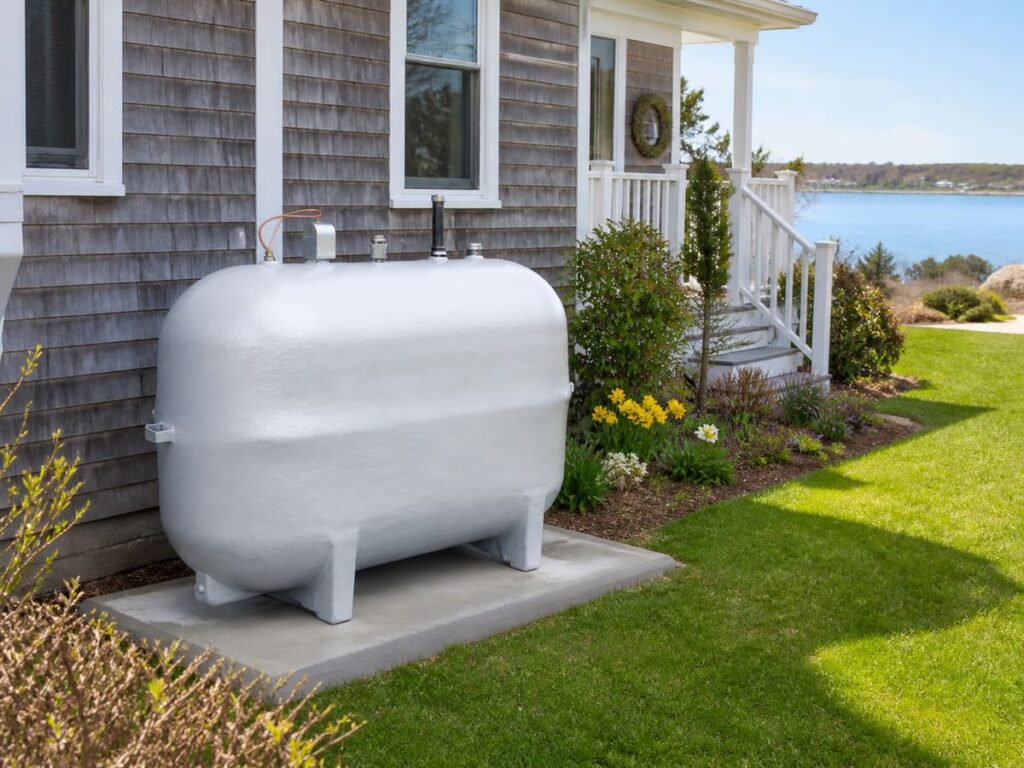
 Living near the ocean is one of the best parts of life in the Halifax area. But if your home is in a coastal part of HRM, salt air can be hard on more than decks, railings, and patio furniture. Over time, it can also be tough on your outdoor oil tank.
That does not mean you need to be alarmed. It simply means outdoor tanks in coastal areas often benefit from a little extra attention and a few smart preventative steps.
One of the first things to think about is the base or pad your outdoor tank sits on. New tank installations, in order to meet code, require a heavier base of class “A” gravel paired with specific blocks. Any age of tank in service should have a solid, stable base to help support the tank properly and to keep it in a safer, more sturdy position over time. There should also be a loop in the oil line to allow for minor movements with seasonal change. For bottom outlet tanks, a valve protector is a great added protection. Good drainage around the area matters too, since standing water and damp conditions can add to wear.
Another important consideration is the tank itself. For homes closer to the coast, modern outdoor tanks and corrosion-resistant finishes can offer added peace of mind. For example, Granby steel tanks have a durable powder coat paint finish which stands up very well to our weather but still requires touch-ups throughout the lifespan of the tank. Non-metallic tanks like Granby’s fibreglass tank offer an even more durable product for a coastal environment.
If you are someone who likes to paint your tank to keep it looking great it is important to use the proper paint for the job. Do not paint over stickers or labels, and use a light color, so the tank doesn’t get too hot and create condensation inside.
If your tank is older, or if you are planning a replacement, it may be worth asking whether a newer tank design or protective coating would be a better fit for your location. While no outdoor tank is completely maintenance-free, choosing the right setup can make a real difference.
Some homeowners also wonder whether an outdoor tank shelter or cover is a good idea. In some situations, reducing direct exposure to harsh weather, blowing salt, and repeated wetting can help protect the tank. The key is making sure the tank still has proper access for safe installation, delivery, service, ventilation, and inspection.
It is also wise to keep grass, weeds, shrubs, and stored items away from the outdoor tank area. Vegetation and clutter can trap moisture and reduce airflow, creating a great environment for corrosion and for making it harder to spot early signs of rust or staining. In general, your tank should be easy to see and easy to inspect.
Finally, a quick visual check from time to time is a good habit, especially after a rough stretch of weather. If you notice rust, flaking paint, staining, dampness, or anything that does not look right, it is a good idea to have it checked sooner rather than later.
The good news is that you do not have to figure all this out on your own. Scotia Fuels can help you assess your outdoor tank setup, talk through your options, and decide whether your home may benefit from added protection in our coastal climate.