

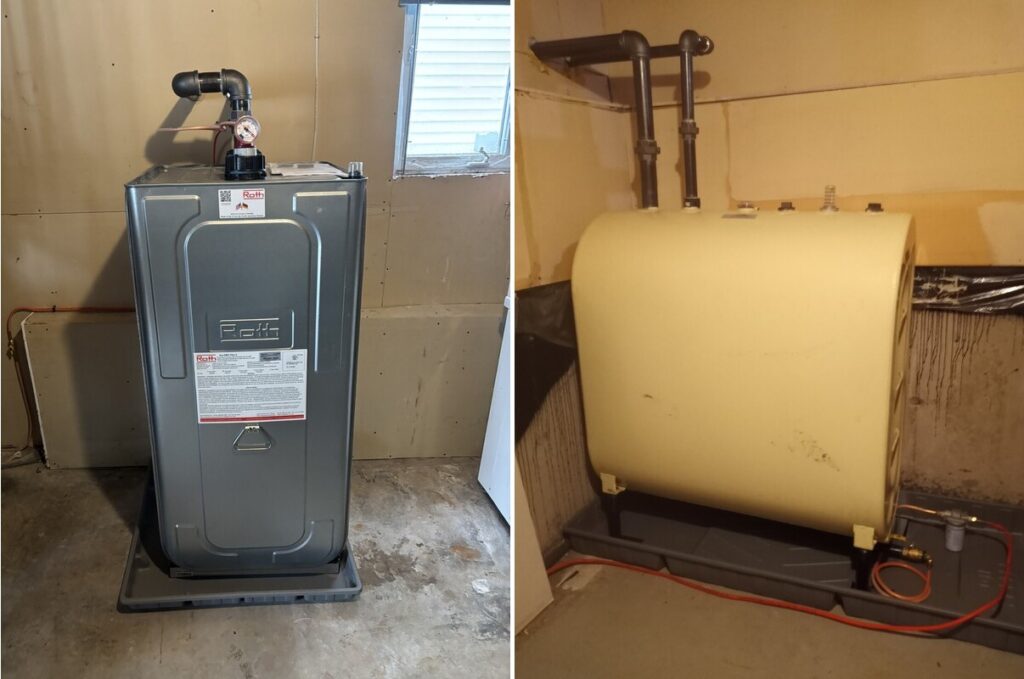
 If you are thinking about replacing your oil tank, one of the first questions is often a very practical one: where can it go?
For many homeowners, the answer is not as simple as picking the most convenient spot. In Nova Scotia, oil tank installations must follow recognized standards, which means the location has to work not only for your home, but also for safety, access, and proper installation.
The good news is that you do not need to sort through all the technical details on your own. What matters most is knowing that oil tank placement is not a one-size-fits-all decision.
In some homes, a tank may be installed indoors. In others, an outdoor installation may be the better choice. It depends on things like available space, the layout of the home, weather exposure, and access for service and fuel delivery.
It is also important to remember that clearances matter. Tanks, fill pipes, and vents cannot simply be placed wherever there is room. Doors, windows, appliances, ignition sources, and service access can all affect what is appropriate. That is one reason why there is no single simple rule that applies to every property.
Another important point is that tank placement is about more than the tank itself. The vent and fill pipes are part of the overall system and need to be located properly for safe operation and convenient delivery. The oil line matters too. Whether the tank is installed inside or outside, the line must be routed and protected correctly. In other words, a proper installation looks at the full setup — not just the tank on its own.
This is where Scotia Fuels can help. Scotia Fuels offers a line of modern oil tanks from trusted brands and can help homeowners choose the type of tank that best fits their home and needs. With decades of experience as certified installers, the team can guide customers through the process from selection to installation. Scotia Fuels also offers flexible, budget-friendly financing options to help make tank replacement easier to manage.
A good rule of thumb is this: think of tank placement as a package deal — tank location, clearances, venting, fill access, and oil line routing all work together.
If your tank is getting older, or you are planning ahead for a replacement, Scotia Fuels can help you understand your options and point you in the right direction.
Want to know more? Visit our website at https://scotiafuels.com/contact-us/ or better still, give us a call at 902-453-2121. One of our friendly staff members would love to talk to you.